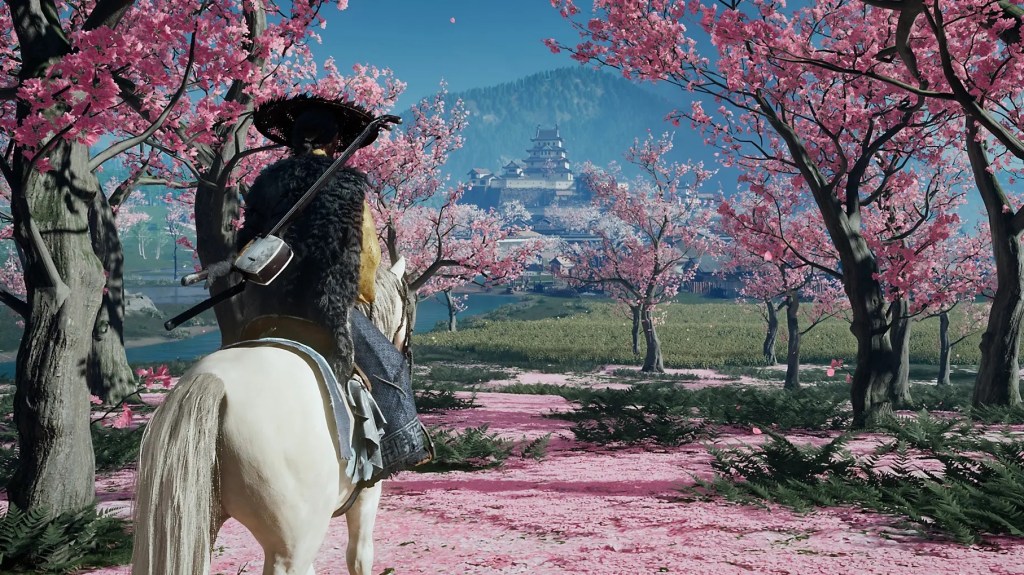
When this game was first announced, I will admit that my only familiarity with this franchise was the developers, Sucker Punch. These game developers are responsible for creating one of my favorite game series, Infamous, a decision based superhero game. Despite the Ghost games being completely different from Infamous in terms of the setting and the narrative following samurai rather than superheroes, I was confident that I’d still enjoy the Ghost games just as much, and sure enough, I did! Before playing the latest game in the series, Ghost of Yōtei, I began my journey by playing and completing its predecessor, Ghost of Tsushima, to familiarize myself with the characters, setting, and control schemes. Ghost of Tsushima followed a samurai by the name of Jin who must use unconventional methods that most samurai would consider dishonorable to save the island of Tsushima, Japan from a Mongol invasion. The story was engaging, the visuals were incredible, and the gameplay was fantastic. The game truly made you feel like a samurai, as you traversed this open world landscape on horseback and battled enemies using actual samurai techniques. The combat was visceral, not shying away from any brutality, but it was also satisfying pulling off different moves and combos. The sequel, Ghost of Yōtei, ended up being no different. As of writing this piece, I have not completed the game yet. However, everything I’ve praised the previous game for is thankfully present here. Despite the story being slightly more simplistic, being a revenge story of a wanderer named Atsu seeking vengeance against the individuals who murdered her family, every other mechanic has been greatly improved. Everything from the visuals to the gameplay mechanics pertaining to combat and interacting with the vast open world have somehow gotten better. The land of Yōtei differs from the land of Tsushima in some notably unique ways. The terrain is a lot flatter this time around, which I believe makes for more seamless and user-friendly exploration. Another difference between the two games is instead of fighting with different stances like the last game, this installment relies on a variety of different weapons and fighting styles such as dual wielding and firearms. Taking place 300 years after the events of Tsushima, the evolution of how these characters defend themselves is definitely evident. There’s even other new mechanics such as taking bounties or camping that allows you to cook food and plan for your upcoming journeys. I’m looking forward to seeing where this game goes in terms of its story and gameplay loop, because I feel like I’ve barely scratched the service.
 Noah Robinson